The dispute over a proposed paint job at Washington’s Eisenhower Executive Office Building is shifting toward an immediate question: whether testing can begin while the project’s legality remains before the court. That timing matters because a test can look limited in scope while still carrying the project into a new stage. The court is being asked to consider not only the eventual appearance of the landmark, but whether preparatory work should proceed before the legal challenge is resolved.
Testing becomes the focus
Preservation groups plan to file a renewed motion for a preliminary injunction on Thursday, July 30, seeking to stop paint testing that could start as soon as Aug. 3. Cultural Heritage Partners announced the planned filing to PEOPLE. The groups say the White House’s proposed feasibility study would test paint on portions of the landmark. The gap between the planned filing and the possible start of testing gives the court a near-term procedural question: whether to pause the work while it considers the dispute.
The motion argues that the work would be more than a technical check of whether paint can adhere to the building. In the groups’ view, testing would advance the broader makeover before the court resolves whether it can proceed. That is the central argument for early court intervention: preliminary work may make a larger project more concrete, even if it doesn't by itself settle the legal issue.
Paint testing can also produce practical information that shapes later decisions, including whether a proposed treatment is workable on the building’s surfaces. That makes the boundary between research and implementation less clear than the label “feasibility study” might suggest. The groups’ concern is that testing could create momentum for the project while the underlying authority and review questions remain contested. A pause, if granted, would preserve the status quo while those questions are considered.
The legal dispute behind the schedule
Cultural Heritage Partners also says the administration had previously told the court that work would not begin before federal historic preservation and environmental requirements were met. The groups allege the project was shifted from the General Services Administration to the White House Office of Administration to “bypass the public review process.” Those are allegations made by the challengers, not a court finding. The account provided here doesn't include the administration’s response, so the competing positions can't be assessed from these claims alone.
The institutional handoff is relevant because the challengers connect it to which review processes apply and when work may begin. In disputes of this kind, the sequence of decisions can matter as much as the proposed physical change: who is directing the work, what review has occurred, and whether testing itself counts as a step that should wait. The court’s task is not simply to judge whether a white finish is desirable. It must address the legal arguments presented to it, including the requested timing of the injunction.
That said, a preliminary injunction is a request, not a result. The planned filing doesn't establish that testing will be stopped, and the allegations about the project’s transfer don't establish that the transfer was improper. The immediate outcome depends on the court’s response to the motion and the arguments before it. For now, the Aug. 3 date is a possible start date described by the challengers, not confirmation that testing will begin then.
The building and the proposed change
Earlier reports said Donald Trump wanted the EEOB painted white. The accompanying image is an AI-generated depiction, first published by Econbrowser. It illustrates a proposed look; it isn't documentation of completed work or a reliable representation of how paint would appear on the actual building.
The image can make the proposal feel settled, but the dispute described here is still about a study and the process surrounding it. A rendering may help readers picture the claimed outcome, yet it can't answer questions about the building’s material condition, the test method, or the legal basis for proceeding. (And this is the part most people overlook.) A visual mock-up is evidence of how someone has chosen to depict an idea, not evidence that the depicted change has been approved or carried out.
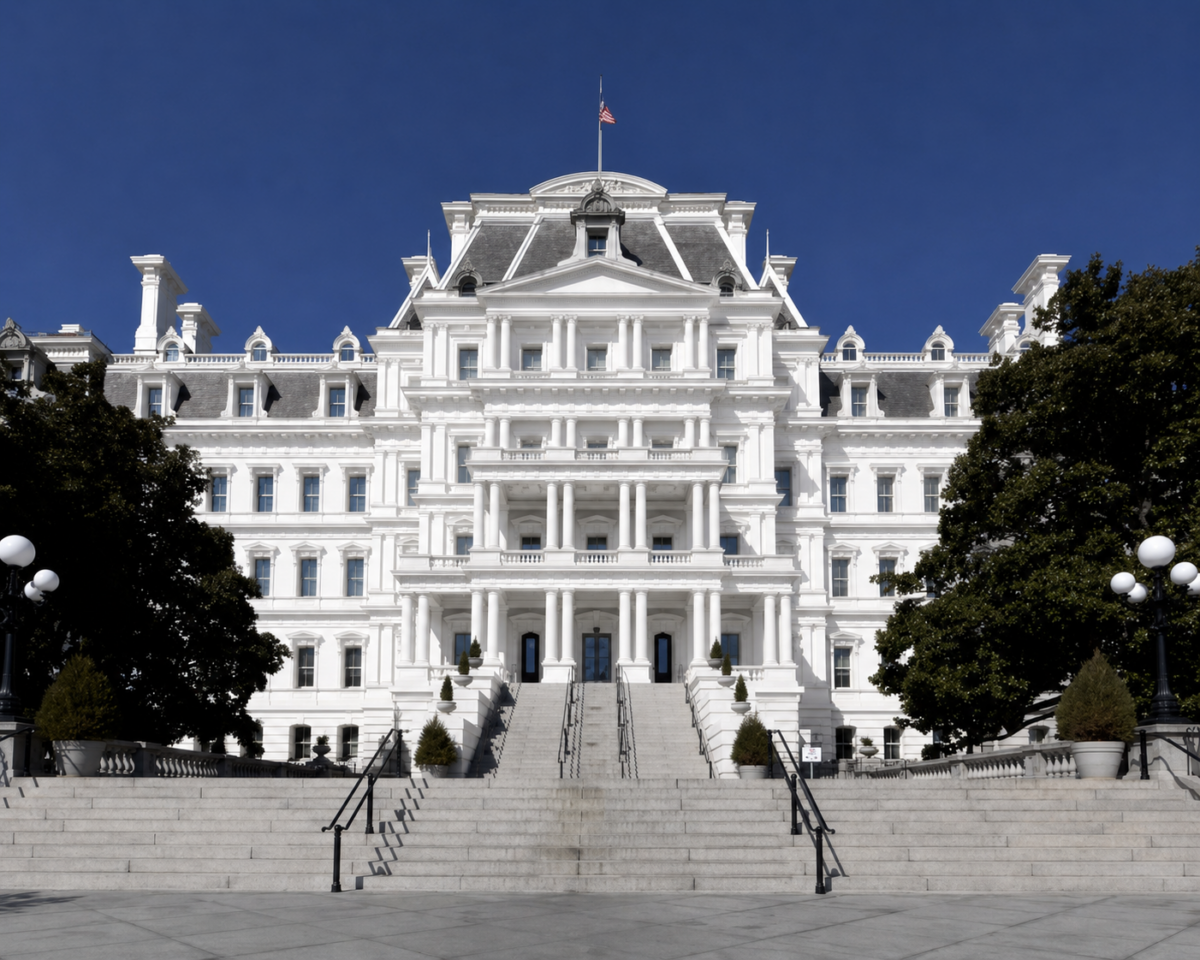
Source: ChatGPT.
What the court’s timing could mean
The court’s response could determine whether paint testing proceeds before the legal challenge is resolved. This is more significant than it looks: once testing starts, the dispute may shift from whether work should begin to what has already been done and what follows from it. That doesn't mean testing would dictate the final outcome, but it explains why the groups are seeking a preliminary injunction now rather than waiting for the broader case to conclude.
If you're working in this space, the key distinction is between a proposal, a feasibility study, and authorized work. The article establishes that preservation groups say testing may begin soon and that they plan to ask the court to stop it; it doesn't establish that the study has begun or that the court has ruled. The writer closes with a pointed reference to the contractor involved in repairs to the Reflecting Pool. A jab, not a finding about the EEOB project.