A reopening with a price
The proposed reopening of the Strait of Hormuz could restore shipping through a route central to energy markets, while giving Iran a greater role in controlling access. That trade-off may matter to markets as much as the return of traffic itself. Under the arrangement described by officials, inbound vessels would use an Iranian-controlled channel and outbound ships would travel through a channel near Oman.
The distinction is significant because reopening a waterway doesn't necessarily mean restoring the conditions that prevailed before a disruption. A route can be physically available while access remains subject to new procedures, oversight or political bargaining. The source doesn't specify the proposed rules in detail, so the practical burden on shipping companies is still unclear.
What the proposed routing would change
From The New York Times:
An arrangement with Iran to reopen the strait could come with a geopolitical cost for the United States. Iranian officials say they are designing the accord to ratify their capacity to control the strait and retain strategic leverage that they did not employ before the war.
Officials familiar with the emerging proposal have said that, under the new framework, vessels heading into the Persian Gulf would have to transit a channel controlled by Iran, while outbound ships would travel on a channel near Oman.
The proposed division of traffic would make the terms of passage part of the agreement's substance, rather than a technical detail. Control over routing can give a government influence over how ships enter and leave a strategically important area, even when vessels continue to move. That's the political point officials quoted by the Times are raising: Iran could emerge from the arrangement with a recognized role that it says it didn't exercise before the war.
There are limits to what can be concluded from the available description. It doesn't state how the channels would be administered, whether the arrangement would include fees, or what would happen if a vessel couldn't follow the designated route. Those questions matter to ship operators because predictability is part of the value of an open passage. An agreement that restores movement but leaves basic operating terms uncertain could still create friction.
And this is the part most people overlook: a resumption of traffic and a settlement of the underlying dispute aren't the same thing. A deal could reduce the immediate interruption while leaving competing claims over access in place. The route might be open, but the political terms governing its use could remain a source of tension.
How markets may read the news
The current setup could replace disrupted transit with resumed flows, though the cost of passage is unknown. For oil markets, the possibility of more regular shipping can change expectations before the actual volume of traffic is clear. Traders respond to the prospect of supply moving more reliably, but they also have to judge whether the proposed arrangement is credible and durable.
The market implication is less stop-start movement in oil prices, as illustrated by the charts below. The first chart is attributed to Kalshi, with the stated source time of noon CT on August 4, 2026; the second provides additional price context. The supplied material doesn't give the chart values or explain their construction, so the images should be read as supporting evidence for the article's point about market movement, not as proof of a particular price forecast.
That distinction matters. A chart can show how prices or expectations moved during a period, but it can't by itself establish why they moved, or whether a move will persist. News about a possible deal may affect expectations quickly, while the details that determine whether shipping actually resumes can take longer to resolve. If you're working in this space, the key question is whether the market is pricing in a durable change in transit conditions or reacting to the possibility of one.
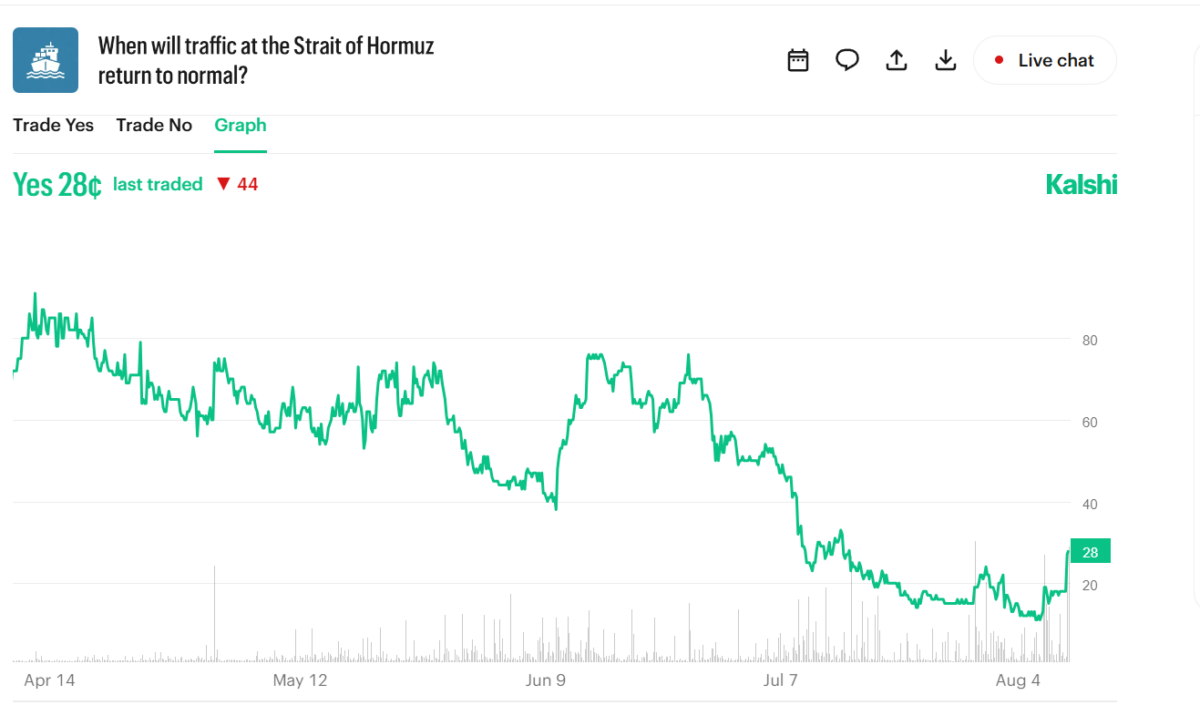
Source: Kalshi, as of 8/4/2026 noon CT.
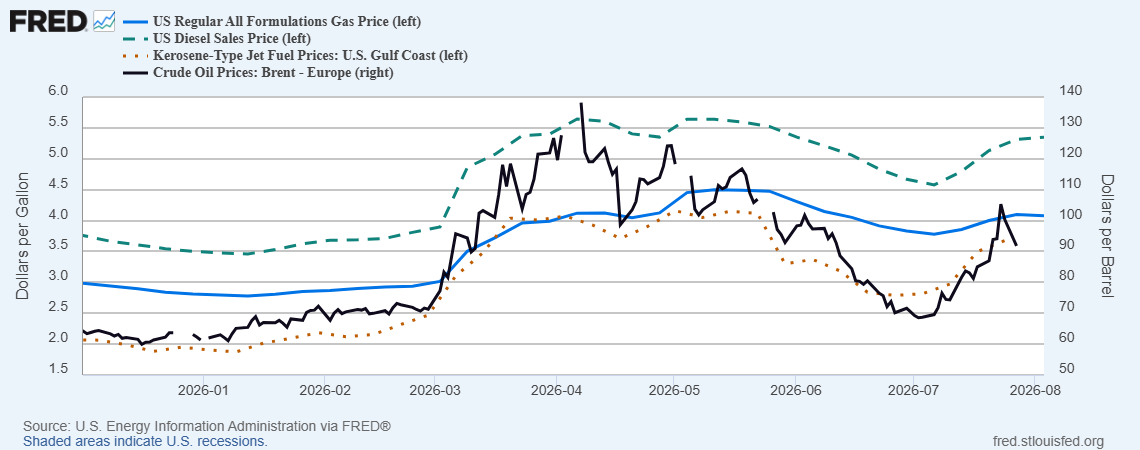
The broader point is that shipping access and energy prices are connected through expectations as well as physical supply. When passage is uncertain, buyers and sellers may have to account for possible delays and interruptions. If traffic resumes under a stable arrangement, some of that uncertainty could recede. But the source doesn't establish how quickly flows would return or how much any change would affect prices.
Durability is the test
The unresolved issue is whether any agreement would last. President Trump’s shifting approach leaves open the possibility that criticism of a deal as an Iranian “win” could prompt another reversal. A change in political support could matter even after an accord is announced, because shipping companies and market participants need more than a short-lived signal to treat access as dependable.
This is more significant than it looks. An arrangement might deliver an immediate economic benefit by allowing vessels to move again, while also giving Iran a formal position in the management of access. Those outcomes can coexist. The first could ease the disruption; the second could alter the political context in which future disputes over passage are handled.
Here's the thing: the proposal's market effect depends on more than the announcement of reopening. The routing terms, the unknown cost of passage and the prospect of political reversals all bear on confidence. A renewed flow of ships could calm one source of uncertainty, but confidence would be fragile if operators couldn't tell whether the rules would hold.
For now, the available facts support a narrow conclusion. Restored transit may ease volatility in oil markets, while the proposed channel arrangement could strengthen Iran's role in controlling access. Whether those effects endure will depend on the agreement's staying power and the way its terms work in practice. A route reopened on paper. The harder test comes after ships start using it.